

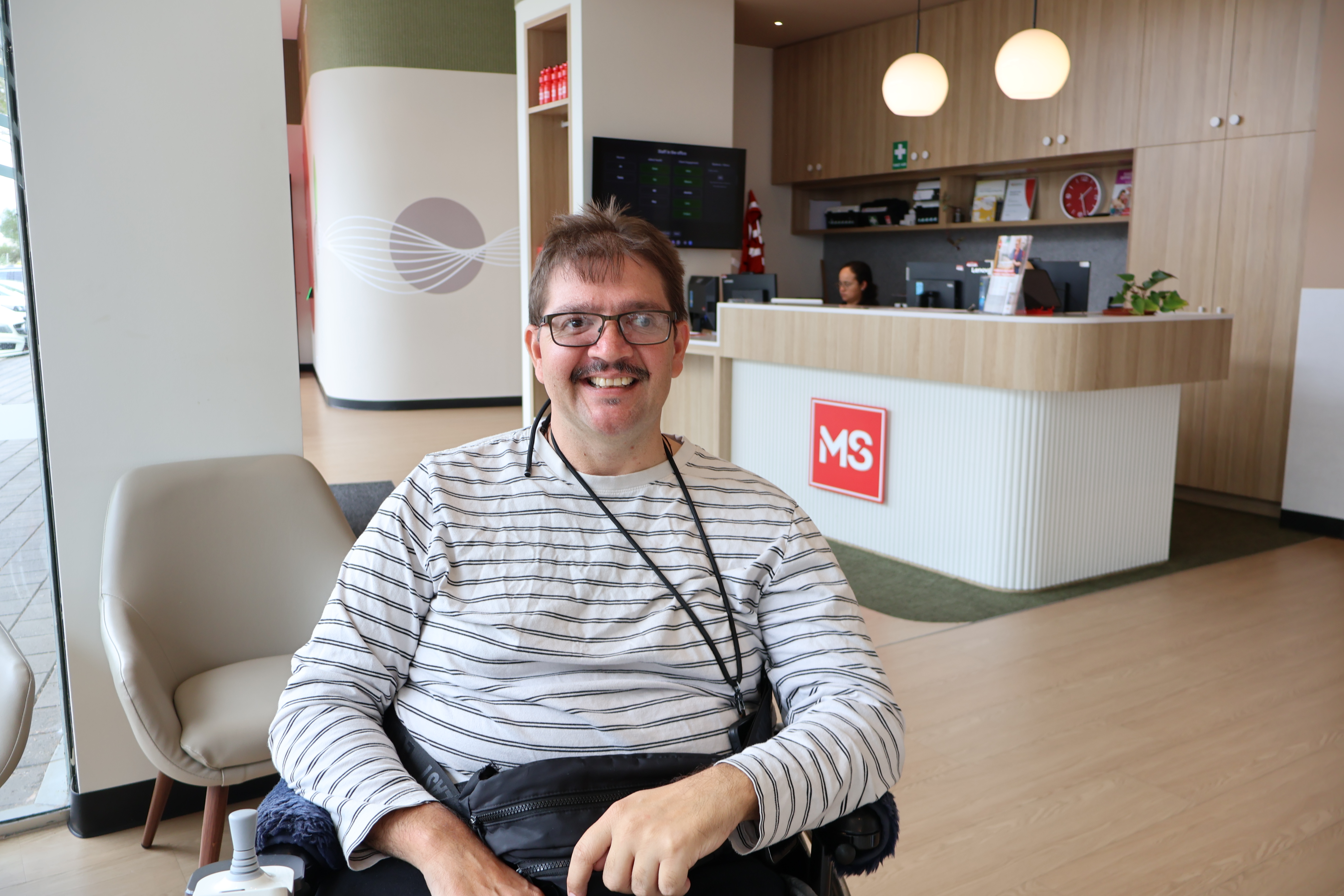
Paul has always been drawn to work that keeps him on his feet. Starting out as a plumber before transitioning to a role at Bunnings, he was never someone who shied away from hard work – a true go-getter in every sense of the word. But when he was diagnosed with multiple sclerosis, it put many things into perspective and changed the foundation his world was built upon.
Looking back, Paul believes his symptoms appeared long before his multiple sclerosis (MS) diagnosis. He recalls a bout of optic neuritis as far back as 1998 – an inflammation of the optic nerve that can cause sudden blurred vision, eye pain and is often an early warning sign of MS – although he didn't know what it was at the time.
In 2012, he received a diagnosis and was finally able to put words to experiences he'd never been able to fully explain. As he had done his whole life, he received the news and got on with it.
“I just cried and then went back to work, that very same day.”
For years after the diagnosis, Paul's life continued largely unchanged. Symptoms stayed minimal, and he kept his head down – working hard and spending his downtime with friends and family, especially his four brothers, one of them born just ten months before him.
Dealing with a degenerative neurological condition can be difficult to begin with, but when symptoms surface, it can become a struggle to keep your head above water. The importance of having a good support system and an understanding employer is something that can make all the difference.
“Bunnings looked after me. I was working the floor but was getting fatigued so they put me on the registers,” Paul remembers.
Five years in, Paul's condition worsened, leaving him no choice but to walk away from the job he loved. The hardest part wasn't leaving the work itself – it was leaving the people. Paul had a knack for helping customers navigate the aftermath of a botched DIY job and he genuinely looked forward to it every day. Without MS, he says plainly, he'd still be there to this day.
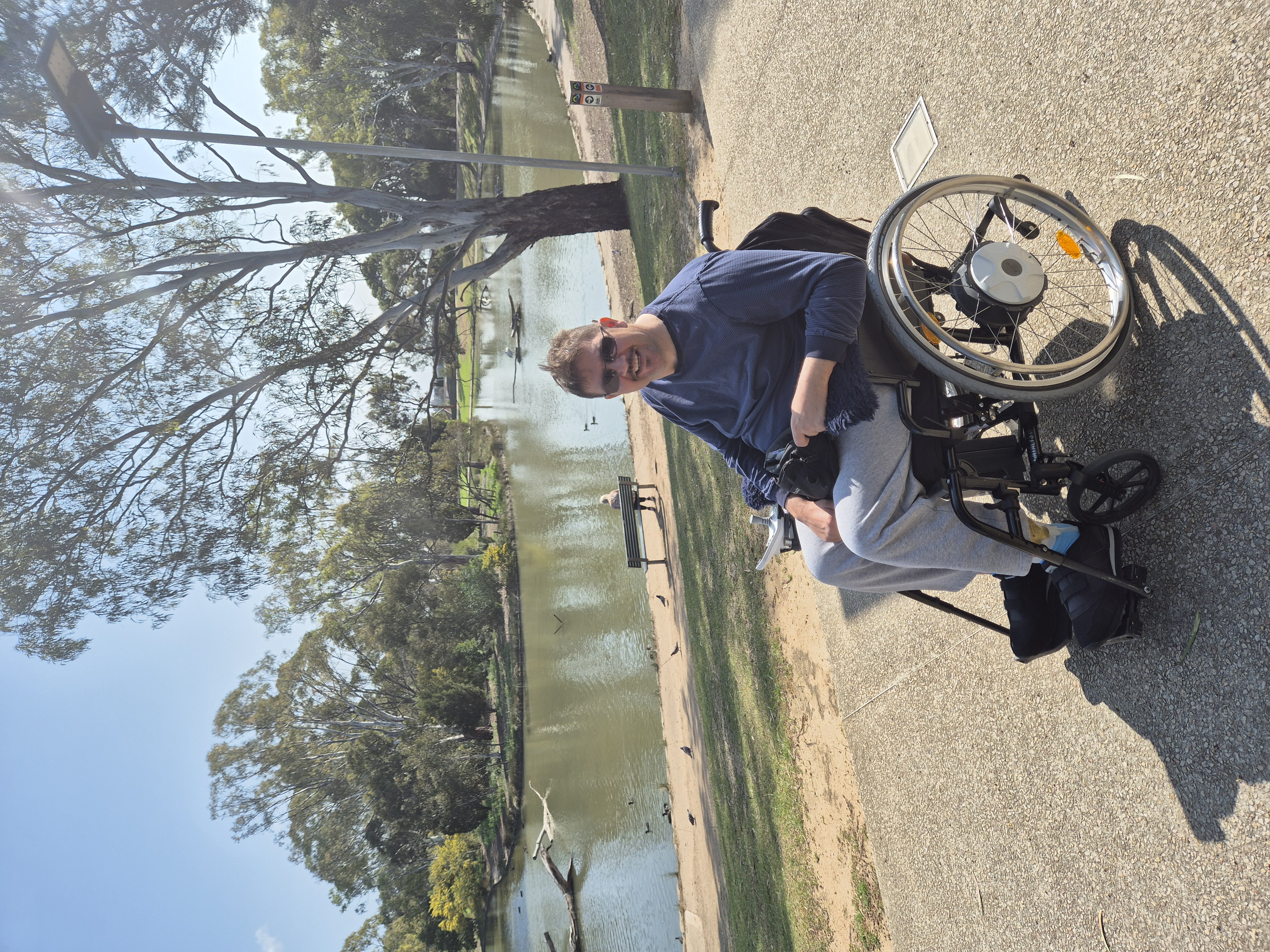
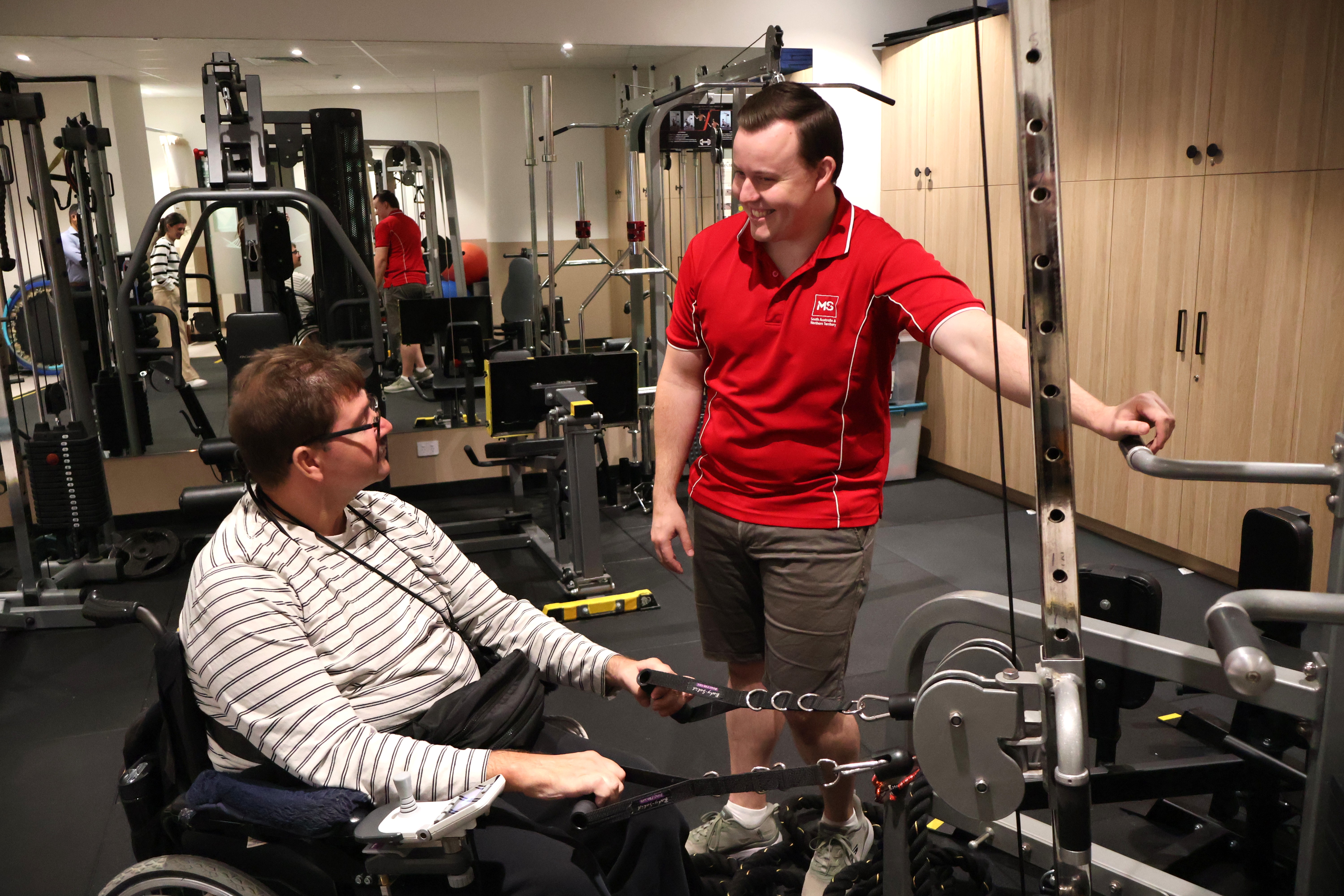
Now in his late 40s, Paul's condition has progressed to secondary progressive MS. However, with the support of MS Society SA & NT Physiotherapist, Evan, he continues to do what he can.
“About two years ago, Paul joined my exercise class. I encourage him to keep moving and focussed on the good things. He’s a character,” Evan laughs.
Experiencing a condition such as MS can be isolating. Symptoms aren’t well known or understood, and due to the nature of the condition – many people don’t even give a second thought to small factors that can become significant barrier to day-to-day life. That’s why the support from the MS Society SA & NT is critical.
“One of the major benefits to the exercise class is the social aspect.”
“It could be one of the only social activity Clients do. It's the closest thing to a truly judgment free social interaction, where they never have to mask, they never have to fake anything. They can just be themselves. I think that's a very freeing and relaxing thing,” explains Evan.
Masking his symptoms is something Paul knows all too well. During his time working at Bunnings, he recalls slurring his speech on multiple occasions – some coworkers questioning what he had been up to out of hours.
“They thought I had been drinking the night before. So, I had no choice but to tell them I had MS.”
Throughout his journey with his condition and the employment, one thing that has stayed consistent is his relationship with the MS Society SA & NT – now nearing on 15 years. As his condition progresses, knowing that the MS Society SA & NT is there – even just to offer a listening ear or some words of advice is so valuable to Paul.
Then came news that brought MS even closer to home – one of Paul's four older brothers had been diagnosed. The disease isn't commonly considered hereditary, yet it hasn't been ruled out, leaving questions that only further research can answer. For Paul, it's a reminder of why research matters so deeply.
“He's doing alright. He's still working and walking, but his speech is slurred.”
He knew something wasn't right, so he went to one neurologist who said, ‘your scans didn't come up with anything.’ And, he said ‘I'll get a second opinion.’ And that came back as MS.”
“We now call each other the MS brothers.”
In late 2025 when the news broke about the MS Society SA & NT going into administration, Paul remembers feeling disappointed and thinking dryly “it was a bugger.”
Now working with sister organisation MSWA, the MS Society SA & NT is working to rebuild something lasting in South Australia – a sustainable model of support that will be there for people like Paul, and perhaps one day, for his brother too.
Research into earlier diagnosis, better symptom management – couldn't matter more for Paul. He is particularly invested in PLATYPUS – a world-leading clinical trial seeking to reverse neurological damage caused by progressive multiple sclerosis (PMS) in Australians living with the debilitating condition. Now reaching the milestone of recruiting trial participants, it’s exciting to see the next stage unfold. Breakthroughs could really be in the near future, something he wishes for.
These days, Paul channels much of his energy into researching trials all over the globe – scouring the internet with the hope that the right one might one day restore his ability to walk and ease the symptoms he carries. Life keeps him busy in other ways too, his 13-year-old son, he laughs, has a particular talent for keeping him humble.
Looking back, Paul wishes he had listened to his body sooner – that he hadn't brushed off those early symptoms. Knowing what he knows now puts everything into perspective. But regrets aside, he continues to look forward. In all his years, Paul has never once been on a plane – a fact he puts down to a slight fear of flying. But where there's a research trial, there's hope. And for that, he'd fly anywhere.