


Some days, even getting off the couch can feel like the workout. If MS fatigue has you struggling to imagine any kind of exercise, you’re not alone and you’re not wrong to be hesitant to try. But there’s a way to move that works with severe fatigue instead of against it. Here’s how to start.
First, know what you’re dealing with
MS fatigue isn’t ordinary tiredness. It can hit without warning, feel out of proportion to what you’ve actually done, feel like it comes and goes without reason. Heat sensitivity, sometimes called Uhthoff’s phenomenon, is also part of the picture for many people: a temporary worsening of symptoms when your body warms up. Understanding this is the first step to working with your fatigue rather than fighting it.
Step 1: Rethink what counts as exercise
Forget the gym for now. When fatigue is severe, exercise might mean two minutes of seated stretching, a few slow breaths or moving from the couch to the kitchen and back. All of it counts. The goal at this stage isn’t fitness, it’s simply reintroducing movement without paying for it later.
Step 2: Pick your window carefully
Time your movement around your best hours and the coolest part of the day. Many people with MS have more energy in the morning but your window of energy may differ, and as heat makes fatigue worse, an early air-conditioned start often works better than a warm afternoon. A cool room, a fan and water close by all help your body cope with movement.
Step 3: Start smaller than feels necessary
It’s tempting to push a bit further once you’re moving. Try and resist it. If fatigue is severe, start well below what you think you can manage. You can build from there over time, but doing too much too soon can set you back for days or even longer. It is also common to "go at it" when you are feeling well, but many find they pay for this over-exertion the following day. We call this the "boom and bust"; and while it doesn't do you any long-term harm, it doesn't help you see the improvements you want to see either.
Step 4: Build gradually, with guidance
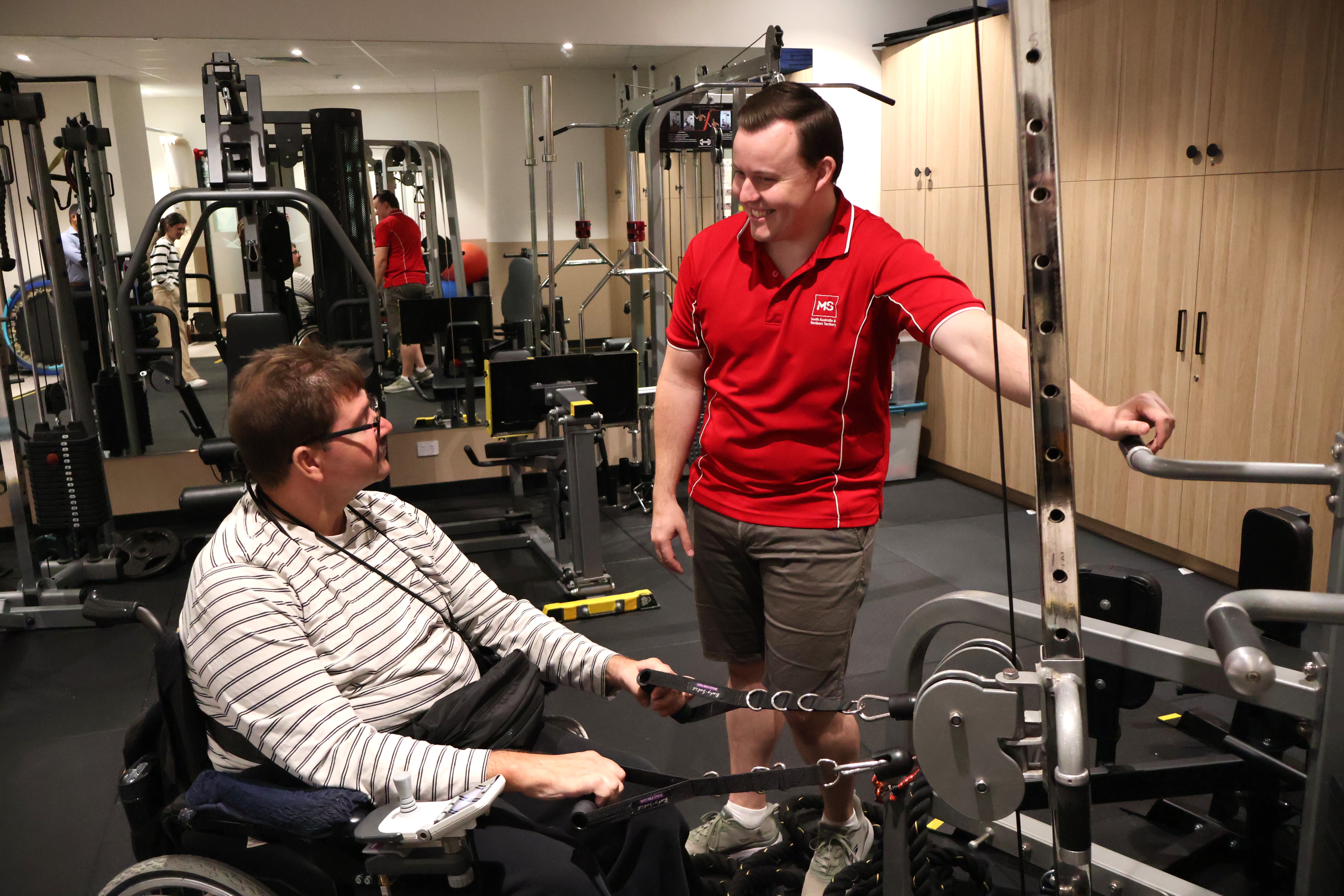
Once gentle movement feels manageable, a physiotherapist can help you progress towards exercises that build strength, balance and endurance. This could include exercises such as seated marching, light resistance work or supported standing. Progress should be slow and prioritise rest breaks, adjusted as your energy shifts from week to week. This is where working with a physiotherapist really pays off. They can tell you what’s safe for your body rather than leaving you to guess.
MS Society SA & NT Physiotherapists often talk about "the 10% rule". It's a generalised guideline that we tailor to each person, but it's the idea that when you want to increase your activity, a 10% increase will cause you some increased fatigue, but typically will not overexert you, or trigger a massive fatigue episode, but is enough of a change to trigger the bodies improvement response. A common example is going from a 10-minute walk to an 11-minute walk.
Some people may use a 5% increased, others a 20%. By working with your therapist, you can find the rate of improvement for you and your MS at your present level.
Step 5: Learn your warning signs
Fatigue from exercise doesn’t always show up straight away. Watch for tiredness the next day that doesn’t settle with rest, new or worse symptoms after activity or a growing reluctance to exercise because of how it leaves you feeling. These are signs to adjust your plan, not reasons to give up on movement altogether.
Some people may get pre-warning signs. A common example might be an increase in tingling in your limbs starting 5 minutes into exercise, but that pre-empts the fatigue onset by 2 minutes. These signs are just your body responding to exercise, they aren't harmful, but that can be excellent ways to track how you are feeling on any one day and adjust how hard you work based on these other symptoms.
If you want to talk more about what these might be, and how to manage them, that's an excellent topic to bring up with your therapist.
When to rest instead
Some days, rest is the right call. Particularly during a relapse, if you’re feeling unusually unwell or if symptoms are well beyond your normal baseline. On other days, gentle movement is usually safe even if it feels like the last thing you want to do. If you’re ever unsure, ask your physiotherapist rather than guessing.
Heat, humidity and pacing
Two things shape how people manage MS fatigue across South Australia and the Northern Territory: distance and climate. Access to a specialist can sometimes be hours away, and in the Territory, tropical heat and humidity add another layer on top of that, often staying high overnight during the build-up and wet seasons. Between the two, pacing and flexible access to support matter even more here than they might elsewhere.
Wherever you are, a few things help: checking the forecast and planning around the coolest part of the day, using a cooling vest or a damp towel around your neck if you’re exercising somewhere without air conditioning and treating extreme heat or humidity days as rest days rather than pushing to keep a routine going. None of this is about avoiding movement altogether, it’s about working with the climate instead of against it.
Exercising by telehealth
Distance doesn't have to mean going without support. If access to a physiotherapist is an issue, telehealth sessions are a genuine option, not just a fallback. A typical session runs through a video call: your physiotherapist talks you through each exercise, watches your form and adjusts things in real time, much the same way they would in person. You don’t need special equipment to get started, just a bit of space to move and a device propped up somewhere your physiotherapist can see you.
If a session calls for equipment like a resistance band, we’ll help you sort out what you need before you get started. This works especially well if you’re in a remote area, don’t drive or simply want to fit a session around work without losing half a day to travel.
This is a service we both offer for 1:1 sessions, or in small group exercise classes, so whether you need personalised treatment or just someone to keep you accountable, we have options that suit both.
Physiotherapy support across SA and NT
Whether you’re in Adelaide, regional South Australia or the Territory, our physiotherapists can help you build an exercise plan that starts exactly where you are, in person or via telehealth. We’ll never ask you to push through pain or exhaustion and where it helps, we’ll work alongside our occupational therapy and nursing teams too.
Get in touch with the MS Society SA & NT Physiotherapy team to build a gentle plan that works with your fatigue, not against it.